AI‑Powered Plugin Builder for WordPress
Democratize WordPress development
WordPress users face a dilemma: hire a developer for custom functionality, or install bloated all-in-one plugins that add hundreds of unwanted features and slow down their sites. With over 60,000 plugins in the WordPress repository, finding a lightweight solution for a specific need is nearly impossible.
This AI-powered vibe coding tool democratizes WordPress development by embedding an AI assistant directly into the WordPress dashboard. Non-developers and even lazy developers can describe custom functionality in plain language and watch it take shape instantly, without switching between WordPress and external AI tools or going through tedious export/download/upload cycles.
Built on WordPress’s new AI Building Blocks framework and combined with an LLM fine-tuned on WordPress coding standards and security best practices, the system generates lean, secure PHP plugins tailored precisely to each site’s needs. The entire workflow happens inside WordPress admin – describe your feature, review the generated code, and activate it with one click.
Target Audience
We’re looking for approximately 10 contributors with diverse skills:
Developers/QA (5-6 people)
- PHP developers familiar with WordPress plugin architecture and hooks
- Frontend developers for building the admin UI
- AI engineers experienced with prompt engineering and LLM fine-tuning
- QA engineers to ensure quality standards are met
WordPress Experts (2-3 people)
- WordPress builders and agency owners who understand real-world pain points
- UX designers who can ensure the interface is intuitive for non-developers
Security Specialists (1-2 people)
- Security experts to implement code validation and sandboxing
- Knowledge of WordPress security best practices and common vulnerabilities
Marketing/Presentation (1 person)
- Help craft the final pitch and demo presentation
Ideal contributors understand the WordPress ecosystem, care about open-source sustainability, and want to empower non-technical users to build exactly what they need without bloat.
Hackathon Goals
Core Functionality:
- A self-contained WordPress plugin embedding an AI assistant in the admin panel, allowing users to describe desired features in natural language and receive generated plugin code without leaving WordPress.
- Full integration with PHP AI client SDK (part of WordPress AI Building Blocks) for flexible LLM connectivity.
- Fine-tuned or prompt-engineered LLM optimized for WordPress coding patterns and security best practices following WordPress Coding Standards.
Live Demo:
- Working MVP that can generate custom plugins from user prompts with one-click installation.
- All code released under GPL-compatible open-source license on GitHub.
Results
8 people. 8 countries. One idea: make WordPress development accessible to everyone.
WordPress powers roughly 40% of the internet — yet building custom functionality on it still requires a developer. With over 60,000 plugins in the repository, users face a painful tradeoff: either hire someone to build exactly what they need, or install bloated all-in-one solutions that add dozens of unwanted features and slow their site down. Even with the rise of AI, the workflow remained broken: copy code from a chatbot, paste it into a local editor, zip it up, upload it, debug it, repeat.
The team behind the AI-Powered Plugin Builder came to CloudFest Hackathon 2026 with a clear mission: eliminate that friction entirely.
From Prompt to Plugin, inside WordPress
The concept is deceptively simple. You describe what you want — in plain language, directly inside the WordPress admin — and within seconds, a working plugin is generated, installed, and ready to activate. No IDE. No file transfers. No external tools.
Under the hood, the builder connects to AI models via WordPress 7.0’s new Connectors API, which provides a unified interface for Anthropic, OpenAI, and Gemini. The AI is given full context about the site before generating code, and an integrated prompt enhancement step helps users who aren’t sure how to phrase their request get better results.
The full feature set the team shipped over the three days of the hackathon includes:
- AI-generated plugins from natural language prompts, with full site context as input
- Prompt enhancement powered by AI, for better and more precise results
- Iteration and conversation history, so you can refine and evolve a plugin across multiple sessions
- One-click installation and activation once the plugin is generated
- Downloadable ZIP for teams who want to inspect or version-control the output
- Quality, security, and compatibility checks using the Plugin Check plugin, with automatic fixes applied where possible
- Conflict prevention, including slug collision detection to avoid overwriting existing plugins
- AI-driven guidance on next steps after a plugin is installed, helping non-technical users get the most out of what they’ve built
- WordPress Playground support, so the whole flow can be tested locally without a live site
An Official WordPress Experiment
Perhaps the most significant outcome of the project isn’t the code itself — it’s where it landed. The Plugin Builder was contributed as a new experiment to the official WordPress AI plugin on WordPress.org, the same plugin maintained by the WordPress core team. While the feature is not yet merged into the main plugin branch, it’s available now as a fork on GitHub and as a ready-to-install ZIP for anyone who wants to try it.
This positions the project not as a one-off hackathon prototype, but as a genuine contribution to WordPress’s AI roadmap — one built on the bleeding edge of WordPress 7.0 beta, a version of the platform that introduces native AI capabilities for the first time.
8 People, 8 Countries — Diversity in Practice
The team behind this project was a living demonstration of what the CloudFest Hackathon is about. Eight contributors from Germany, Greece, Belarus, Italy, Lithuania, Austria, Switzerland, and the United States — many meeting for the first time at the hackathon itself — and shipped a coherent, (almost) production-ready feature in under three days.
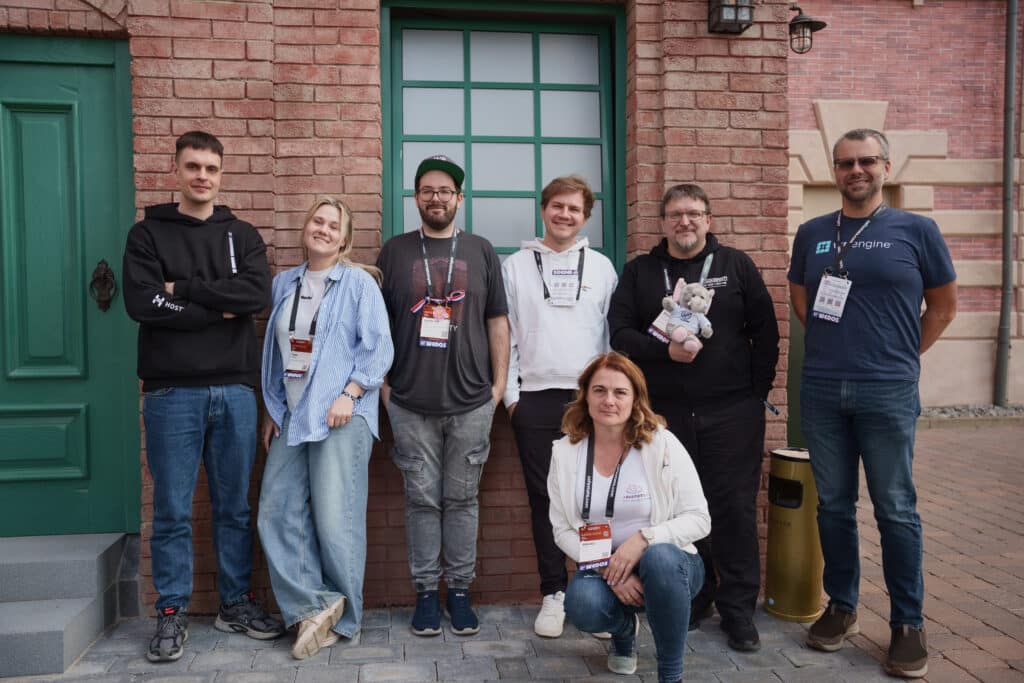
- Justin Joe Kostka 🇩🇪
- Katia Tsironi 🇬🇷
- Lada Makei 🇧🇾
- Marco Chiesi 🇮🇹
- Martynas Umbražiūnas 🇱🇹
- Monika Pucher 🇦🇹
- Pascal Birchler🇨🇭
- Weston Ruter 🇺🇸
Project Links
The project is open source and available now. Visit wpaipluginbuilder.org for setup instructions, a demo video, and download links. The GitHub repository is a fork of the official WordPress AI plugin; contributions are welcome.
GitHub: github.com/westonruter/wp-ai-experiments
Project Leads
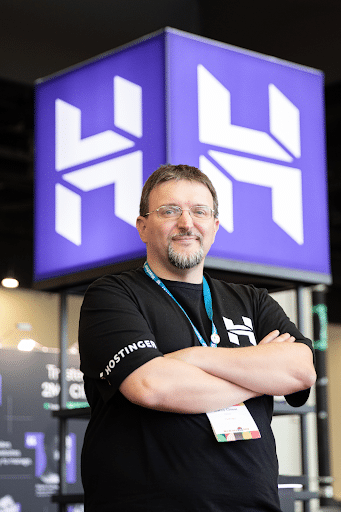
Marco Chiesi
Head of WordPress, Hostinger
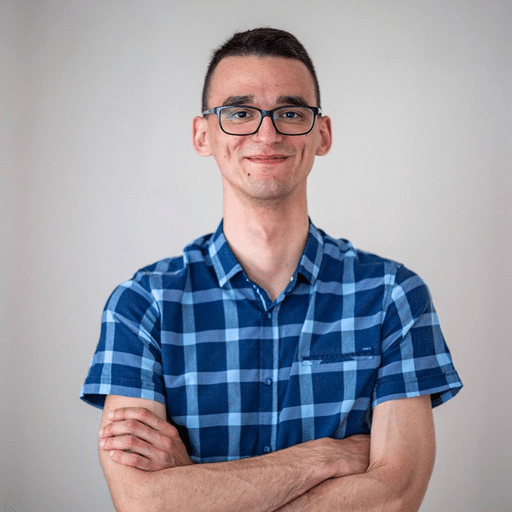
Daniels Martinovs
Senior WordPress Developer, Hostinger

Martynas Umbražiūnas
WordPress Developer, Hostinger
#WordPress
#WordPressAI
#VibeCoding
#OpenSource
#WordPressPlugins
#NoCodeWordPress
Project Mentor